by super | Oct 31, 2025 | Elpro Technologies, Elpro Technologies Post
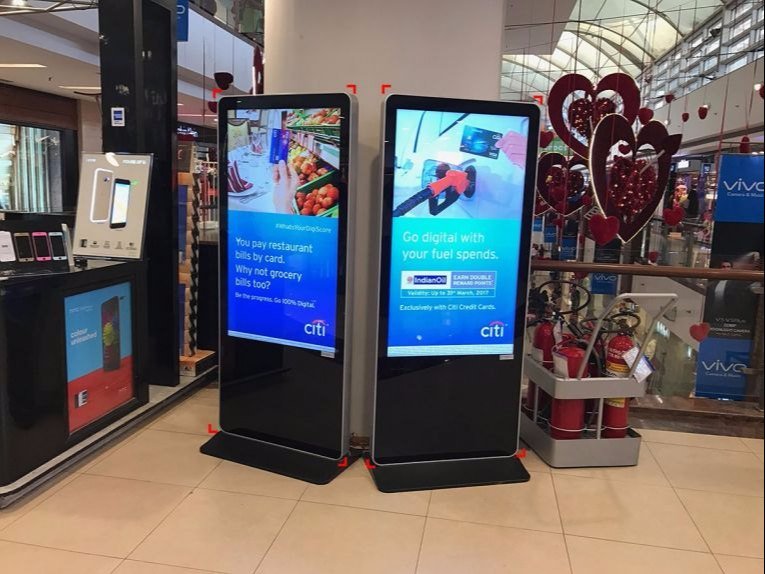
The Digital Standee is a sleek, high-resolution digital signage solution designed for modern businesses. With its compact, space-saving design and Full HD display, it delivers eye-catching visuals for advertisements, promotions, and customer engagement. Featuring Wi-Fi, USB, and remote content management, this portable standee is ideal for retail, restaurants, hotels, corporate offices, and events.
A digital standee (also known as a digital display standee or digital signage ) is an electronic version of a traditional printed standee. It combines digital display technology—like LED, LCD, or touchscreens—with a physical stand or enclosure, and is often used for advertising, promotions, and information display in public spaces.
Elpro Technologies Bangalore stands as a trusted leader in Industrial PCs, Digital Signage, Touchscreen Kiosks, and advanced display systems. Over the years, the company has built a strong reputation for quality, reliability, and innovation, making it a preferred choice for businesses looking for robust industrial hardware solutions. With a customer-first approach, Elpro Technologies continues to serve clients across a wide spectrum of industries, providing products that deliver consistent performance and long-term value.
Beyond its headquarters in Bangalore, Elpro Technologies has expanded its delivery and support network to cover major cities across India. Whether your business is in Mumbai, Delhi, Chennai, Hyderabad, Pune, Kochi, Kolkata, or emerging industrial hubs,
Elpro Technologies ensures timely delivery, installation, and service support. This pan-India presence reflects the company’s commitment to making world-class industrial and digital solutions accessible to enterprises of all sizes and sectors.
Every product offered by Elpro Technologies is designed and manufactured with strict quality standards, ensuring durability and superior performance even in challenging industrial environments. From rugged industrial computers and single-board systems to custom kiosks, vertical digital standees, and floor displays, Elpro Technologies provides a complete range of solutions under one roof. This end-to-end capability allows customers to enjoy seamless integration, easier maintenance, and a single point of contact for all their hardware needs.
Contact : Elpro Technologies
📍 Address: #43, 2nd Cross Road, P&T Colony, Opposite BWSSB Office, R.T. Nagar, Bengaluru – 560032, Karnataka, India
📞 Mobile: +91-8892147021 / +91-8892147023
📧 Email: sales@elprotech.in | info@elprotech.in
🌐 Website: www.elprotech.in

by super | Oct 31, 2025 | Elpro Technologies, Elpro Technologies Post
🖥️ What is a Touch Screen Kiosk?
A touch screen kiosk is an interactive, self-service terminal that allows users to access information or perform transactions via a digital touchscreen interface — without needing human assistance
Touch screen kiosks are sitting ducks for cyberattacks. I saw it myself, from the busy Mumbai airports to the small shops in Bangalore. These kiosks exploded in popularity nationwide, promising convenience and speed. However, without the right defenses, they are a huge security risk. This guide will help you protect your touch screen kiosks, especially with the unique issues facing India, so you can protect your investments and, more importantly, your customers’ sensitive information. Keeping touch screen kiosk security India a priority is essential these days.
Touchscreen kiosk inclusion in India is more than just following rules. It is a promise to build an inclusive society. By embracing inclusion standards, assistive technology and complete training, we guarantee everyone has fair access to information, regardless of their abilities. I imagine a future where technology empowers all citizens, closing gaps and building a truly inclusive India.
💡 Types of Touch Screen Kiosks
-
Information Kiosk: Provides maps, directories, and general information (e.g., malls, airports).
-
Self-Service Kiosk: Used for check-in/check-out, ticketing, or ordering (e.g., restaurants, hotels).
-
Payment Kiosk: Accepts cash or card payments (e.g., bill payment, parking).
-
Interactive Wayfinding Kiosk: Offers digital maps and navigation assistance.
-
Healthcare Kiosk: For patient registration, appointment booking, or telemedicine.
-
Retail Kiosk: Product browsing, inventory checking, or self-checkout.
Elpro Technologies Bangalore stands as a trusted leader in Industrial PCs, Digital Signage, Touchscreen Kiosks, and advanced display systems. Over the years, the company has built a strong reputation for quality, reliability, and innovation, making it a preferred choice for businesses looking for robust industrial hardware solutions. With a customer-first approach, Elpro Technologies continues to serve clients across a wide spectrum of industries, providing products that deliver consistent performance and long-term value.
Beyond its headquarters in Bangalore, Elpro Technologies has expanded its delivery and support network to cover major cities across India. Whether your business is in Mumbai, Delhi, Chennai, Hyderabad, Pune, Kochi, Kolkata, or emerging industrial hubs, Elpro Technologies ensures timely delivery, installation, and service support. This pan-India presence reflects the company’s commitment to making world-class industrial and digital solutions accessible to enterprises of all sizes and sectors.
Every product offered by Elpro Technologies is designed and manufactured with strict quality standards, ensuring durability and superior performance even in challenging industrial environments. From rugged industrial computers and single-board systems to custom kiosks, vertical digital standees, and floor displays, Elpro Technologies provides a complete range of solutions under one roof. This end-to-end capability allows customers to enjoy seamless integration, easier maintenance, and a single point of contact for all their hardware needs.
Contact : Elpro Technologies
📍 Address: #43, 2nd Cross Road, P&T Colony, Opposite BWSSB Office, R.T. Nagar, Bengaluru – 560032, Karnataka, India
📞 Mobile: +91-8892147021 / +91-8892147023
📧 Email: sales@elprotech.in | info@elprotech.in
🌐 Website: www.elprotech.in
by super | Oct 31, 2025 | Elpro Technologies, Elpro Technologies Post
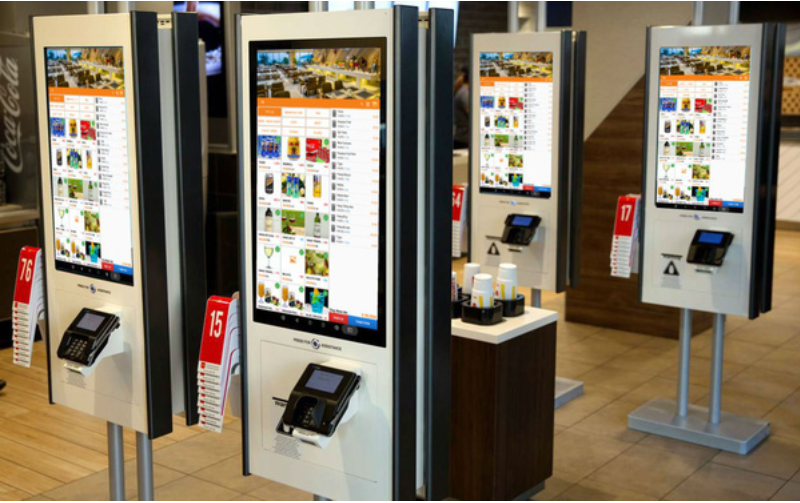
Kiosk Systems integrate hardware and software to deliver comprehensive self-service solutions for a variety of industries across India. These systems combine interactive touchscreens, secure payment modules, printers, and network connectivity to support applications such as ticketing, information dissemination, bill payments, and product ordering. Kiosk Systems are essential for businesses aiming to improve operational efficiency, reduce costs, and offer 24/7 customer service in retail, banking, transportation, healthcare, and government sectors.
Elpro Technologies – India’s Premier Kiosk Systems Provider
Elpro Technologies specializes in designing and manufacturing robust, scalable Kiosk Systems tailored to meet diverse industry requirements. Our systems are built using premium components and cutting-edge technology to ensure durability, reliability, and seamless performance even in challenging environments. With expertise in hardware-software integration, Elpro delivers turnkey Kiosk Systems that enable businesses to streamline processes, enhance user engagement, and boost revenue.
Service Locations for Kiosk Systems
Bangalore – The Technology Capital of India
Bangalore’s tech-savvy enterprises and public venues leverage Elpro’s Kiosk Systems for applications ranging from interactive directories to cashless payments. Our systems feature customizable designs, high responsiveness, and scalable configurations suited for fast-paced environments like IT parks, malls, and transport hubs.
Elpro Technologies Bangalore stands as a trusted leader in Industrial PCs, Digital Signage, Touchscreen Kiosks, and advanced display systems. Over the years, the company has built a strong reputation for quality, reliability, and innovation, making it a preferred choice for businesses looking for robust industrial hardware solutions. With a customer-first approach, Elpro Technologies continues to serve clients across a wide spectrum of industries, providing products that deliver consistent performance and long-term value.
Beyond its headquarters in Bangalore, Elpro Technologies has expanded its delivery and support network to cover major cities across India. Whether your business is in Mumbai, Delhi, Chennai, Hyderabad, Pune, Kochi, Kolkata, or emerging industrial hubs,
Elpro Technologies ensures timely delivery, installation, and service support. This pan-India presence reflects the company’s commitment to making world-class industrial and digital solutions accessible to enterprises of all sizes and sectors.
Every product offered by Elpro Technologies is designed and manufactured with strict quality standards, ensuring durability and superior performance even in challenging industrial environments. From rugged industrial computers and single-board systems to custom kiosks, vertical digital standees, and floor displays, Elpro Technologies provides a complete range of solutions under one roof. This end-to-end capability allows customers to enjoy seamless integration, easier maintenance, and a single point of contact for all their hardware needs.
Contact : Elpro Technologies
📍 Address: #43, 2nd Cross Road, P&T Colony, Opposite BWSSB Office, R.T. Nagar, Bengaluru – 560032, Karnataka, India
📞 Mobile: +91-8892147021 / +91-8892147023
📧 Email: sales@elprotech.in | info@elprotech.in
🌐 Website: www.elprotech.in
by super | Oct 30, 2025 | Elpro Technologies, Elpro Technologies Post
Did you know that some factories burn through nearly 75% of their operating funds just on energy? It is a staggering waste. I have personally seen how slashing those costs while simultaneously boosting production is achievable. The key lies in energy efficient industrial PC India solutions, which are specifically designed and readily available. The improvements you will see can be genuinely game changing.
For years, my team and I have worked alongside Indian companies, concentrating on improvements to their operations. One critical point has become increasingly obvious: energy conservation is not just a perk anymore; it is an absolute requirement. This is not only about trimming expenses; it is about safeguarding your company’s future and playing a part in a more ecologically responsible India. We focus on providing energy efficient industrial PC India solutions.
I have witnessed firsthand how the correct technology can completely transform factories. Priorities are shifting; businesses now realize that the initial price is only a small part of the big picture. They are now thinking about the total cost of ownership, notably the energy used by their PCs.
India’s industrial sector is growing quickly, which is fantastic for both the economy and job creation. However, this expansion also increases the demand for power. Common industrial PCs, often made for peak performance without any regard for energy consumption, can make this problem even worse. This is where the value of energy efficient industrial PC India becomes critical.
Several factors are encouraging Indian companies to adopt industrial PCs that are conscious of their power consumption:
- Rising Energy Bills: The steady increase in electricity prices forces companies to aggressively reduce their energy usage.
- Tougher Environmental Rules: The Indian government is putting in place stricter environmental rules, pushing industries toward more ecologically sound operations.
- Growing Awareness: Businesses are becoming increasingly aware of the significant advantages of energy conservation, including lower costs and a better reputation.
- Better Technology: Improvements in power saving technology are making the adoption of energy efficient solutions simpler and more affordable.
I have noticed a major change in how my customers think. They are not only concerned with the initial cost anymore; they now carefully consider long term expenses, especially energy usage. This trend will speed up the adoption of green operations in the industrial sector. We provide energy efficient industrial PC India solutions across the board.
Understanding Energy Consumption in Industrial PCs
Before looking at particular models, it is vital to understand where industrial PCs usually waste the most energy. The main power users are:
- Processor (CPU): The CPU, being the brain of the PC, uses a lot of energy, especially when handling demanding tasks.
- Graphics Card (GPU): If your PC handles complex visuals, the GPU can also use a lot of energy.
- Memory (RAM): RAM needs energy to store data. More RAM means higher energy usage.
- Storage Devices (HDD/SSD): HDDs use much more energy than SSDs because they have moving parts.
- Motherboard: The motherboard also adds to the total energy consumption.
- Power Supply Unit (PSU): The PSU changes AC power to DC power for the PC. A poor PSU wastes energy.
My team regularly uses power monitoring tools to measure energy usage in our labs. This helps us find areas where we can improve. We recently tested two industrial PCs that seemed the same. The one with the better PSU used almost 15% less energy. These seemingly small differences add up fast.
Key Features of Energy Efficient Industrial PCs
Several features help an industrial PC be energy efficient. When picking power saving models, keep these points in mind:
- Low Power CPUs: Pick CPUs made for low energy usage, like Intel’s Atom or Celeron series or AMD’s Ryzen Embedded series. They offer a good mix of performance and conservation.
- Solid State Drives (SSDs): Select SSDs over HDDs. SSDs use less energy, offer faster performance and are tougher.
- Fanless Design: Fanless PCs use passive cooling, removing the need for fans that use power. This reduces noise and improves how reliable they are.
- Efficient Power Supply Unit (PSU): Select a PSU with an 80+ certification. This makes sure the PSU runs at least 80% efficiently.
- Power Management: Make sure the PC supports features like sleep mode and CPU throttling. These let the PC lower its power usage when it is not doing anything.
- Optimized BIOS: The BIOS settings affect power usage. Configure the BIOS to turn off features you do not need and maximize power saving settings.
- Energy Star: Look for PCs with Energy Star certification. This confirms they meet established energy conservation standards.
One of my customers, a large manufacturer, switched to fanless industrial PCs with low power CPUs. They saw a 30% drop in energy usage, which led to big cost savings. The fanless design also made the PCs more reliable, reducing downtime and maintenance costs.
Selecting the correct energy efficient industrial PC India for your particular needs requires careful thought. Remember these points:
- Define Needs: Start by outlining what you need. What will the PC do? How much performance do you need? What are the environmental conditions?
- Consider Budget: Decide on your budget. Power saving industrial PCs might cost more at first, but they offer long term savings because they use less energy.
- Research Models: Look into different energy smart industrial PC models. Compare what they offer and their prices. Read what customers say about them.
- Evaluate Performance: Think about how well they perform. Find benchmarks that apply to what you will be doing.
- Consider Reliability: Think about how reliable they are. Look for PCs with a high Mean Time Between Failures (MTBF).
- Check Certifications: Verify certifications such as Energy Star and RoHS. These show they follow environmental and safety standards.
- Consult Experts: Get advice from experts.
- Test: If you can, test the PC before using it fully. This helps find any problems and confirms that the PC meets your needs.
I always recommend a full assessment. I tell my customers to test different models to find the best fit. This makes sure they put their money into a solution that delivers both performance and energy conservation.
Several manufacturers offer energy smart industrial PCs for different uses. Here are a few examples:
- Advantech: Advantech offers many power saving industrial PCs, including fanless models and embedded computers. Their UNO series is known for using little power and being small.
- Siemens: Siemens is a leading provider of industrial automation solutions, including industrial PCs. Their Simatic series offers energy efficient options.
- Dell: Dell provides industrial PCs made for rough conditions. Their Embedded Box PC series balances performance and energy conservation.
- AAEON: AAEON specializes in industrial motherboards. They offer power saving industrial PCs that put innovation first.
- Kontron: Kontron is a global leader in embedded computing. They offer energy smart industrial PCs made for demanding uses.
Specific models to consider:
- Advantech UNO-2484G: A fanless embedded PC with a low power Intel Core i7 CPU.
- Siemens Simatic IPC227E: A compact industrial PC with a low power Intel Celeron CPU.
- Dell Embedded Box PC 5000: A flexible industrial PC offering a variety of processor choices.
- AAEON BOXER-6640M: A fanless embedded PC with a rugged design.
- Kontron KBox A-230: A compact industrial PC with a low power Intel Atom CPU.
My team has worked with all these manufacturers and can confirm that their products are reliable and efficient. Think carefully about what you need before deciding. A PC that works well for one use might not be good for another. When thinking about energy efficient industrial PC India solutions, remember to talk to experts.
Besides picking power saving industrial PCs, there are other things you can do to lower energy usage:
- Virtualization: Use virtualization to run multiple applications on one PC, reducing the total number of PCs you need.
- Cloud Computing: Move some applications to the cloud to lower the load on local PCs.
- Remote Management: Use remote management tools to watch and manage PCs, letting you shut them down when they are not being used.
- Software Optimization: Improve software to use as little CPU and memory as possible.
- Regular Maintenance: Keep PCs in good shape to make sure they run efficiently.
I helped a logistics company use virtualization across their warehouses. By putting applications onto fewer PCs, they lowered energy usage by over 40%. This also made IT management simpler and lowered hardware costs.
Ecologically sound operations are becoming more critical in industrial PC design. Manufacturers are focusing on sustainable materials, reducing waste and designing PCs so they can be recycled more easily. Examples of ecologically sound operations include:
- RoHS Compliance: RoHS limits the use of dangerous materials in electronic devices.
- Energy Star: Energy Star certifies products that meet strict energy conservation guidelines.
- EPEAT: EPEAT helps buyers think about how electronics affect the environment.
- Recycled Materials: Some manufacturers use recycled materials in their PCs to lower their environmental impact.
- Efficient Packaging: Manufacturers are using better packaging to reduce waste and lower transportation costs.
I recommend focusing on PCs that follow RoHS, are Energy Star certified and are EPEAT registered. These certifications provide assurance that the PCs meet environmental standards. Also, make sure old PCs are disposed of correctly through e waste recycling.
Several companies have successfully used energy smart industrial PC solutions with great results. Here are a few examples:
- Automotive Manufacturer: An automotive manufacturer replaced normal PCs with fanless industrial PCs using low power CPUs. This resulted in a 25% drop in energy usage and made the equipment more reliable.
- Pharmaceutical Company: A pharmaceutical company used virtualization across its manufacturing plants. This lowered energy usage by 35% and simplified IT management.
- Food Processing Plant: A food processing plant installed power saving industrial PCs with remote management features. This let them watch their PCs remotely, lowering energy usage and improving how well they worked.
These examples show the advantages of using energy smart industrial PC solutions. By carefully picking hardware and using the correct approaches, companies can lower energy usage, cut expenses and improve their environmental impact.
The Indian government is actively encouraging energy conservation through different efforts. These are meant to get industries to use ecologically sound operations and lower energy usage.
Key efforts include:
- National Mission for Enhanced Energy Efficiency (NMEEE): NMEEE seeks to improve energy conservation across different sectors.
- Perform, Achieve and Trade (PAT) Scheme: PAT sets energy reduction goals for industries that use a lot of energy.
- Energy Conservation Building Code (ECBC): ECBC sets energy conservation standards for buildings.
- Bureau of Energy Efficiency (BEE): BEE encourages energy conservation throughout India.
The government also offers rewards for companies that invest in energy efficient technology, such as tax breaks. These rewards can lower the cost of using energy smart industrial PC solutions.
I always tell my customers to take advantage of these rewards, as they can greatly lower the costs of using green solutions.
The future looks good. As energy prices keep rising and environmental rules get stricter, the need for power saving solutions will grow. Technological improvements will keep driving innovation, resulting in industrial PCs that are more powerful and use less energy.
I predict:
- Increased Use of AI: AI will make energy usage better.
- Greater Integration with IoT: Industrial PCs will connect with the Internet of Things (IoT), enabling energy monitoring in real time.
- More Sustainable Materials: Manufacturers will use sustainable materials to lower environmental impact.
- Increased Focus on Circular Economy: There will be a greater focus on the circular economy, encouraging reuse and recycling.
My team and I are dedicated to staying at the forefront of these trends and helping our customers use the most effective energy efficient industrial PC India solutions.
Using energy smart industrial PCs is essential for businesses wanting to do well in a market that values both being competitive and being ecologically responsible. By carefully picking hardware and using strategic methods, Indian industries can achieve big cost savings. As experts in this area, my team and I strongly believe that focusing on power saving and ecologically sound operations is not only helpful but also vital. Putting money into sustainability will pave the way for success in the long run.
by super | Oct 30, 2025 | Elpro Technologies, Elpro Technologies Post
Here is a shocking statistic: nearly 70% of industrial PC failures are due to inadequate environmental certifications. If your Indian business depends on reliable computers, understanding Industrial PC Certifications India is not just about ticking boxes; it is about ensuring your operations run smoothly, complying with the rules and preparing for the future. I have spent years helping businesses navigate the world of industrial PC standards, and I can tell you that the correct certifications can make a huge difference.
Why Industrial PC Certifications India Matter
Across India, from busy factories to complex power plants and large transportation systems, the need for strong and dependable computing is growing. When Industrial PCs (IPCs) have the right certifications, you know that they can handle tough conditions, meet important regulations and keep working well, even in difficult environments.
Think about a drug company using IPCs to carefully manage sensitive production processes. If the system fails because it does not meet standards, it could mean wasted medicine, big fines and damage to its reputation. Or picture a renewable energy plant relying on IPCs to control connections to the power grid. If the system breaks down, it could lead to major energy losses and grid problems. These examples show why it is so important to follow industry standards and ensure full compliance in India.
The Real Business Advantages of Certified IPCs
- Better Reliability: Certified IPCs are made and tested carefully to withstand extreme temperatures, strong vibrations, significant impacts and high humidity, which reduces failures and downtime.
- Following the Rules: Many industries in India must follow strict rules about safety, emissions and data protection. Certified IPCs help you meet these rules, reducing the risk of legal trouble.
- Better Performance: Certified IPCs often use advanced technology and designs, which improves performance, reduces energy use and extends their lifespan.
- A Competitive Edge: Showing that you meet recognized standards improves your organization’s credibility and reputation, giving you an advantage over competitors.
Breaking Down Key Industrial PC Certifications and Standards in India
The world of IPC certifications can seem overwhelming. Let us simplify some of the most important standards for Indian businesses.
1. IEC Standards
The International Electrotechnical Commission (IEC) creates standards for electrical and electronic products around the world. Several IEC standards are especially important for industrial PCs.
- IEC 60068: These standards describe the testing methods for electronic devices in different environmental conditions, including temperature, humidity, vibration and impact. IPCs that pass IEC 60068 testing prove they can operate reliably in harsh environments.
- IEC 61000: These standards deal with electromagnetic compatibility (EMC), ensuring that IPCs minimize electromagnetic interference and can withstand external electromagnetic disturbances. This is crucial for maintaining stable operations in industrial settings with heavy machinery and electronic equipment.
- IEC 60529: This standard defines Ingress Protection (IP) ratings, which show how well a device is protected against dust and water. For example, an IP65 rated IPC is completely dust tight and protected against water spray.
2. CE Marking
CE marking indicates that a product meets European Union (EU) standards for health, safety and environmental protection. While not required in India, CE marking is widely seen as a sign of quality and compliance. Many Indian companies that export to Europe use CE marked IPCs to make entering the market easier.
3. UL Certification
UL (Underwriters Laboratories) is a globally recognized safety certification organization. UL certification means that a product has been thoroughly tested and meets strict safety standards. Although based in the US, UL certifications are highly respected in India and often meet or exceed Indian safety requirements.
4. RoHS Compliance
The Restriction of Hazardous Substances (RoHS) directive limits the use of dangerous materials in electrical and electronic devices. RoHS compliance protects the environment and promotes worker safety. Many Indian organizations use RoHS compliant IPCs to support global sustainability efforts.
5. BIS Certification
The Bureau of Indian Standards (BIS) is India’s national standards organization, setting standards for various products, including electronic devices. While BIS certification is not always required for IPCs, it is becoming more common for specific government projects and contracts. Getting BIS certification shows a commitment to quality assurance in India and following local regulations.
A Simple Guide to the Certification Process
Getting the necessary certifications for industrial PCs can seem complicated. Here is a simple breakdown of the key steps:
- Know the Rules: Find out which certifications are most important based on your industry, how you plan to use the IPC and your target market.
- Pick a Lab: Choose an accredited testing laboratory that is authorized to perform the required tests. Make sure the lab knows about IPCs and understands what each standard requires.
- Get Your Paperwork Ready: Gather all the necessary documents, including product specifications, schematics and test reports. The testing laboratory will give you a full list of what you need.
- Test It: Send your IPCs to the testing laboratory for evaluation. The lab will perform tests to confirm that you meet the specified standards.
- Fix Any Problems: If any issues come up during testing, work with the testing laboratory to fix them, which might involve changing the IPC’s design or parts.
- Get Certified: If you pass all the tests, the testing laboratory will issue a certificate of compliance, which allows you to display the certification mark on your products and promotional materials.
- Keep Up to Date: Maintain your certifications by reviewing and updating them regularly. Standards change, so stay informed and ensure your IPCs continue to meet the latest requirements.
Real Examples: IPC Certification at Work
Let us look at a few examples to show why IPC certification is so important.
Case Study 1: Automotive Manufacturing
A major car manufacturer in India uses IPCs to control robots on the assembly line. These IPCs are constantly exposed to vibrations, extreme heat and electromagnetic interference from welding equipment. To ensure they work reliably, the manufacturer chose IPCs certified to IEC 60068 (environmental testing) and IEC 61000 (EMC). This resulted in less downtime, better production and fewer defects.
Case Study 2: Solar Power Plant
A solar power plant in Rajasthan uses IPCs to monitor and adjust its solar panels and inverters. These IPCs are exposed to strong sunlight, dust and high temperatures. To ensure they operate without interruption in this tough environment, the plant selected IPCs with an IP65 rating (dust and water protection) and certification to IEC 60068. As a result, the plant operates at its best, produces the most energy and keeps maintenance costs down. I clearly remember touring the facility and being impressed by how smoothly the systems ran, even in the hot desert sun. It showed me how valuable proper certification is.
Important Things to Consider When Choosing a Certified IPC
Choosing the right certified IPC requires careful thought. Keep the following points in mind:
- What You Need: What specific environmental conditions, performance demands and regulatory limits apply to how you plan to use it?
- Certification Standards: Which certifications are most important for your industry and market?
- Product Details: Does the IPC meet your technical needs for processing power, memory, storage and connectivity?
- Vendor Reputation: Choose a vendor known for providing high quality certified IPCs.
- Help and Support: Does the vendor offer full support and service to help with setup, configuration and maintenance?
- Your Budget: Consider the total cost, including the initial price, maintenance costs and potential downtime.
What the Future Holds for Industrial PC Certifications in India
The need for certified IPCs in India is expected to grow significantly in the coming years, driven by more industrial activity, stricter rules and a greater understanding of the advantages of following industry standards. As India strengthens its manufacturing sector and invests in infrastructure, the need for dependable computing solutions will only increase.
I believe that the Bureau of Indian Standards (BIS) will become even more important in setting standards for IPCs in India. As BIS certification becomes more common, Indian businesses will benefit from a clearer and more consistent way to ensure quality assurance in India, creating a fair playing field and promoting fair competition.
Furthermore, I expect to see greater acceptance of international standards such as IEC and UL in India. As Indian companies become more involved in global supply chains, they must meet international standards to stay competitive. Using IPCs certified to these standards will allow Indian businesses to show their commitment to quality and safety.
So what’s the takeaway? Understanding and following Industrial PC Certifications India is essential for organizations that want reliability, compliance and a competitive advantage. By investing in certified IPCs and staying informed about changing standards, Indian businesses can ensure their operations are strong, efficient and ready for whatever comes next. While meeting these requirements might seem difficult, the long term benefits for your organization cannot be denied. I have always seen that focusing on quality pays off in the end.
